

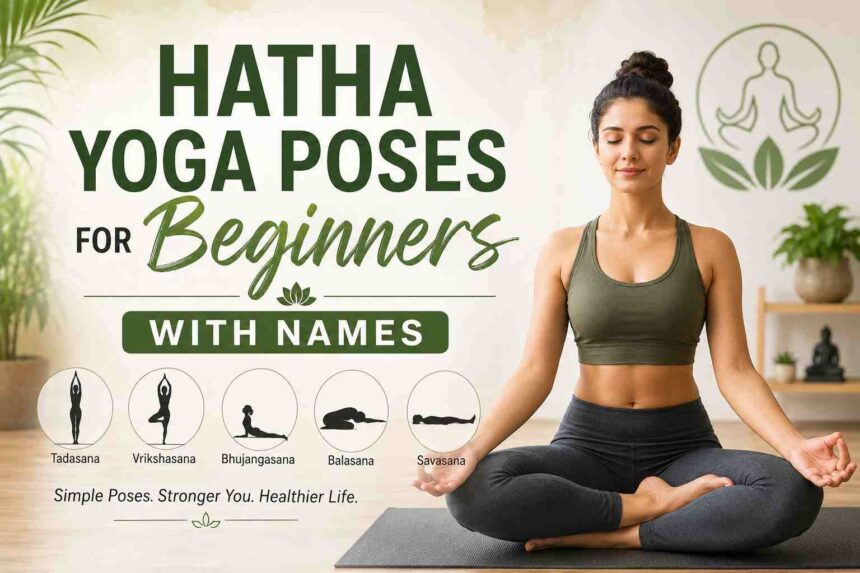
If you’re new to yoga and looking for a gentle yet effective way to improve your health, Hatha Yoga is one of the best places to begin. It focuses on basic yoga postures (asanas), breathing techniques (pranayama), and relaxation, making it ideal for beginners of all ages.
In this guide, you’ll learn the most popular Hatha yoga poses for beginners with names, their benefits, and how to practice them safely.
What Is Hatha Yoga?
Hatha Yoga is a traditional style of yoga that emphasizes physical postures, controlled breathing, and mindfulness. The word “Ha” represents the sun, while “Tha” represents the moon, symbolizing the balance of opposing energies in the body.
Unlike fast-paced yoga styles, Hatha Yoga allows you to hold poses longer, making it easier to learn proper alignment and breathing techniques.
Benefits of Hatha Yoga for Beginners
Practicing Hatha Yoga regularly offers numerous health benefits, including:
- Improves flexibility
- Increases body strength
- Enhances posture
- Reduces stress and anxiety
- Boosts concentration
- Improves balance and coordination
- Supports healthy breathing
- Promotes better sleep
- Relieves muscle stiffness
- Improves overall physical and mental well-being
10 Best Hatha Yoga Poses for Beginners With Names
1. Mountain Pose (Tadasana)
Benefits
- Improves posture
- Strengthens legs
- Enhances body awareness
- Improves balance
How to Do It
- Stand with your feet together.
- Keep your spine straight.
- Relax your shoulders.
- Keep your arms by your sides.
- Breathe deeply for 30–60 seconds.
2. Tree Pose (Vrikshasana)
Benefits
- Improves balance
- Strengthens legs
- Enhances focus
- Increases stability
Steps
- Stand straight.
- Place one foot against your opposite inner thigh.
- Bring your palms together.
- Focus on a fixed point.
- Hold for 20–30 seconds.
3. Downward Facing Dog (Adho Mukha Svanasana)
Benefits
- Stretches the spine
- Strengthens arms and shoulders
- Improves flexibility
- Relieves back stiffness
Steps
- Start on your hands and knees.
- Lift your hips toward the ceiling.
- Straighten your legs as much as comfortable.
- Press your palms firmly into the mat.
- Hold for 30 seconds.
4. Child’s Pose (Balasana)
Benefits
- Relaxes the body
- Reduces stress
- Stretches the hips
- Relieves lower back pain
Steps
- Sit on your heels.
- Fold forward.
- Stretch your arms in front.
- Rest your forehead on the floor.
- Breathe slowly.
5. Cobra Pose (Bhujangasana)
Benefits
- Strengthens the back
- Improves spinal flexibility
- Opens the chest
- Helps reduce fatigue
Steps
- Lie on your stomach.
- Place your palms beside your chest.
- Lift your upper body.
- Keep elbows slightly bent.
- Hold for 20–30 seconds.
6. Cat-Cow Pose (Marjaryasana-Bitilasana)
Benefits
- Improves spinal mobility
- Relieves back tension
- Enhances flexibility
- Improves posture
Steps
- Begin on all fours.
- Inhale and arch your back (Cow Pose).
- Exhale and round your spine (Cat Pose).
- Repeat slowly for 1 minute.
7. Bridge Pose (Setu Bandhasana)
Benefits
- Strengthens the back
- Improves hip flexibility
- Opens the chest
- Strengthens glutes
Steps
- Lie on your back.
- Bend your knees.
- Lift your hips upward.
- Press your feet firmly into the floor.
- Hold for 20–30 seconds.
8. Seated Forward Bend (Paschimottanasana)
Benefits
- Stretches hamstrings
- Improves flexibility
- Calms the mind
- Relieves stress
Steps
- Sit with legs extended.
- Inhale deeply.
- Exhale and bend forward.
- Reach toward your feet.
- Hold comfortably.
9. Easy Pose (Sukhasana)
Benefits
- Promotes relaxation
- Improves meditation
- Enhances breathing
- Reduces stress
Steps
- Sit cross-legged.
- Keep your back straight.
- Rest your hands on your knees.
- Close your eyes.
- Focus on slow breathing.
10. Corpse Pose (Savasana)
Benefits
- Deep relaxation
- Reduces stress
- Lowers muscle tension
- Improves mental clarity
Steps
- Lie flat on your back.
- Keep your arms relaxed.
- Close your eyes.
- Breathe naturally.
- Stay for 5–10 minutes.
Beginner Hatha Yoga Routine (20 Minutes)
Here’s a simple routine to get started:
| Yoga Pose | Duration |
|---|---|
| Mountain Pose | 2 minutes |
| Tree Pose | 2 minutes |
| Cat-Cow Pose | 3 minutes |
| Downward Dog | 2 minutes |
| Cobra Pose | 2 minutes |
| Child’s Pose | 2 minutes |
| Bridge Pose | 2 minutes |
| Seated Forward Bend | 2 minutes |
| Easy Pose | 2 minutes |
| Corpse Pose | 3 minutes |
Practice this routine 3–5 times per week for the best results.
Tips for Beginners
- Practice on an empty stomach or at least 2–3 hours after eating.
- Wear comfortable, stretchable clothing.
- Use a non-slip yoga mat.
- Focus on breathing rather than perfection.
- Avoid pushing your body beyond its comfort level.
- Stay hydrated.
- Practice consistently for lasting benefits.
- Consult a healthcare professional before starting yoga if you have any medical conditions, recent injuries, or are pregnant.
Common Mistakes Beginners Should Avoid
- Holding your breath during poses
- Rushing through movements
- Overstretching
- Ignoring proper alignment
- Skipping the warm-up or cool-down
- Comparing yourself to others
- Practicing despite sharp pain
Frequently Asked Questions (FAQs)
Is Hatha Yoga good for beginners?
Yes. Hatha Yoga is one of the most beginner-friendly forms of yoga because it emphasizes slow movements, basic poses, and controlled breathing.
How often should beginners practice Hatha Yoga?
Beginners can start with 20–30 minutes, 3 to 5 days per week, and gradually increase the duration as they become more comfortable.
Can I lose weight with Hatha Yoga?
Hatha Yoga can support weight management by improving muscle tone, increasing physical activity, and reducing stress. Combining it with a balanced diet and regular exercise can enhance results.
Do I need to be flexible to start Hatha Yoga?
No. Flexibility develops over time through consistent practice. Hatha Yoga is suitable for people of all fitness levels.
What is the best time to practice Hatha Yoga?
Many people prefer practicing in the morning to feel energized for the day. However, evening sessions can also help reduce stress and promote relaxation.
Conclusion
Hatha Yoga is an excellent starting point for anyone looking to improve flexibility, strength, posture, and mental well-being. By learning these beginner-friendly poses and practicing consistently, you can build a strong foundation for a lifelong yoga journey.
Remember, yoga is not about achieving perfect poses—it’s about creating balance between the body and mind. Begin with these simple Hatha yoga poses, listen to your body, and enjoy the benefits that regular practice brings.
Also Read : 7-Move Rule in Chess: Fact, Fiction, or Common Mistake?