

Introduction
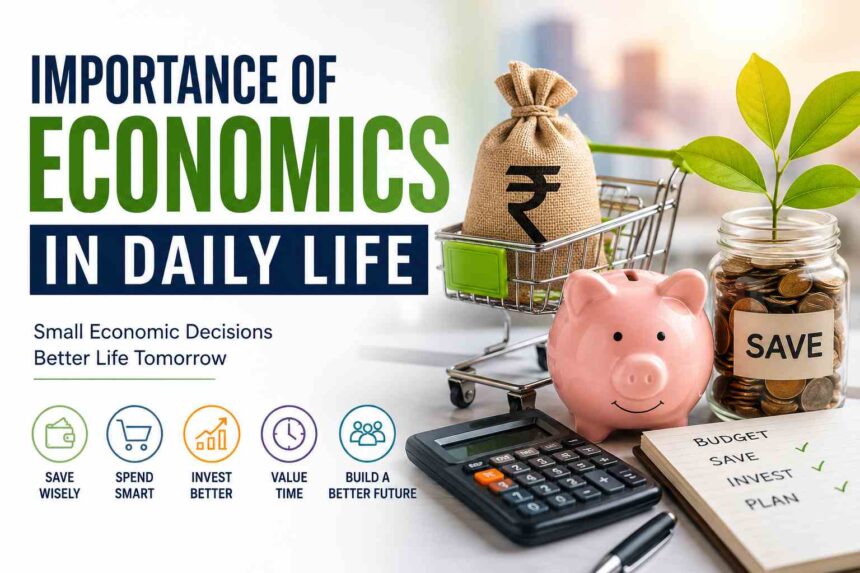
Economics is often misunderstood as a subject limited to businesses, governments, or financial experts. In reality, economics plays a significant role in everyone’s daily life. From deciding how to spend your salary to choosing the best investment plan, economics influences almost every decision we make.
Understanding the importance of economics in daily life helps individuals make smarter financial decisions, manage limited resources efficiently, and improve their overall quality of life. Whether you’re a student, homemaker, entrepreneur, or working professional, basic economic knowledge can help you navigate everyday challenges with confidence.
In this blog, we’ll explore the importance of economics, its practical applications, and why learning economics is essential in today’s world.
What Is Economics?
Economics is the study of how individuals, businesses, and governments use limited resources to satisfy unlimited wants and needs. Since resources like money, time, labor, and natural resources are scarce, economics helps us make the best possible choices.
Economics is generally divided into two branches:
- Microeconomics: Focuses on individual consumers, households, and businesses.
- Macroeconomics: Deals with the economy as a whole, including inflation, unemployment, GDP, and economic growth.
Both branches directly influence our everyday lives.
Why Is Economics Important in Daily Life?
1. Helps in Better Financial Planning
Economics teaches people how to allocate their income wisely. Budgeting, saving, investing, and controlling unnecessary expenses are all based on economic principles.
For example:
- Creating a monthly budget
- Saving for emergencies
- Comparing product prices
- Choosing affordable alternatives
Good financial planning reduces debt and improves long-term financial stability.
2. Improves Decision-Making
Every day we make economic decisions without realizing it.
Examples include:
- Should you buy a new phone or save the money?
- Is it better to rent or purchase a home?
- Should you cook at home or eat out?
Economics helps evaluate costs, benefits, and alternatives before making decisions.
3. Teaches the Value of Scarcity
Resources are limited, but human wants are unlimited. Economics helps people understand scarcity and prioritize their needs.
For example:
A student with a limited budget may choose textbooks over entertainment because education offers greater long-term benefits.
Learning to prioritize helps avoid unnecessary spending.
4. Encourages Smart Spending Habits
Economics promotes informed purchasing decisions.
Consumers often:
- Compare prices
- Read product reviews
- Wait for discounts
- Choose value-for-money products
These habits save money and increase purchasing satisfaction.
5. Helps Manage Time Efficiently
Time is one of our most valuable resources.
Economics teaches opportunity cost—the value of the next best alternative you give up when making a choice.
For example:
If you spend three hours watching TV instead of studying, the opportunity cost is the knowledge or skills you could have gained.
Understanding opportunity cost encourages better time management.
6. Helps Understand Inflation
Everyone experiences inflation.
When prices of groceries, fuel, transportation, and utilities increase, purchasing power decreases.
Economics explains:
- Why prices rise
- How inflation affects savings
- Why salaries need periodic adjustments
Understanding inflation helps individuals plan investments and expenses more effectively.
7. Supports Better Career Decisions
Economics helps individuals evaluate:
- Job demand
- Salary trends
- Industry growth
- Future career opportunities
Choosing careers based on economic demand can improve income and job security.
8. Encourages Saving and Investing
Economics emphasizes the importance of:
- Saving regularly
- Investing wisely
- Earning passive income
- Building wealth over time
People with basic economic knowledge often make better investment decisions and prepare for retirement more effectively.
9. Helps Businesses Grow
Business owners use economics every day.
They make decisions about:
- Pricing products
- Hiring employees
- Managing production costs
- Forecasting demand
- Marketing strategies
Economic analysis helps businesses maximize profits while satisfying customers.
10. Promotes Responsible Use of Resources
Economics encourages efficient utilization of resources like:
- Water
- Electricity
- Fuel
- Food
- Raw materials
Using resources wisely benefits both individuals and society while protecting the environment.
Real-Life Examples of Economics
Economics is present in everyday situations.
Shopping
Choosing between two brands based on price and quality is an economic decision.
Education
Selecting a college by comparing tuition fees and future career opportunities involves economic thinking.
Transportation
Choosing public transport instead of driving to save fuel costs reflects economic decision-making.
Household Budgeting
Families plan monthly expenses to ensure income covers necessities and savings.
Investments
Deciding whether to invest in stocks, mutual funds, or fixed deposits requires economic understanding.
Importance of Economics for Students
Economics helps students:
- Develop critical thinking skills
- Understand financial concepts
- Learn problem-solving techniques
- Prepare for competitive exams
- Build strong career foundations
Students also gain awareness of national and global economic issues.
Importance of Economics for Society
Economics contributes to:
- Economic development
- Poverty reduction
- Employment generation
- Efficient resource allocation
- Better public policies
- Improved living standards
Governments use economic principles to formulate budgets, taxation policies, welfare programs, and development strategies.
Importance of Economics in Business
Businesses rely heavily on economics to:
- Analyze consumer behavior
- Determine pricing strategies
- Forecast market demand
- Reduce production costs
- Increase profitability
- Allocate resources efficiently
Without economic planning, businesses may struggle to remain competitive.
Benefits of Understanding Economics
People with economic knowledge can:
- Make informed financial decisions
- Control unnecessary spending
- Build wealth through smart investments
- Understand market trends
- Adapt to changing economic conditions
- Improve long-term financial security
Common Economic Concepts Used Every Day
Some basic economic concepts everyone uses include:
- Scarcity
- Opportunity Cost
- Supply and Demand
- Budgeting
- Inflation
- Savings
- Investment
- Productivity
- Consumption
- Cost-Benefit Analysis
These concepts influence both personal and professional decisions.
Challenges Without Economic Knowledge
Without understanding economics, individuals may:
- Overspend
- Accumulate debt
- Make poor investment choices
- Ignore inflation
- Mismanage resources
- Struggle with financial planning
Economic literacy reduces these risks significantly.
Also Read : CNF Full Form in Export: Meaning, Responsibilities, Process & Key Differences
Tips to Apply Economics in Everyday Life
Here are some practical ways to use economics daily:
- Create a monthly budget.
- Save at least 20% of your income.
- Compare prices before purchasing.
- Avoid impulse buying.
- Invest regularly for long-term goals.
- Track your expenses.
- Understand the impact of inflation.
- Improve financial literacy through books and courses.
Small economic decisions can lead to substantial financial benefits over time.
Conclusion
Economics is not just an academic subject—it is a practical life skill that influences nearly every aspect of our daily lives. From budgeting and saving money to making informed purchasing decisions and planning for the future, economic principles help us use limited resources efficiently and achieve our goals.
By understanding economics, individuals become better decision-makers, businesses operate more effectively, and societies grow stronger. Whether you’re managing your personal finances, pursuing a career, or running a business, economics provides the tools needed to make smarter, more informed choices.
Investing time in learning basic economics today can lead to better financial stability, improved opportunities, and a higher quality of life tomorrow.
Frequently Asked Questions (FAQs)
1. Why is economics important in everyday life?
Economics helps people make informed decisions about spending, saving, investing, and managing limited resources effectively.
2. How does economics affect personal finance?
It guides budgeting, saving, debt management, and investment decisions, leading to greater financial stability.
3. What is the role of economics in business?
Economics helps businesses determine pricing, understand consumer demand, manage costs, and maximize profits.
4. How does economics help students?
It develops analytical thinking, financial literacy, and problem-solving skills while preparing students for future careers.
5. Can learning economics improve decision-making?
Yes. Economics teaches people to evaluate costs, benefits, and alternatives, helping them make more rational and informed decisions.